
Why Does Male Pattern Baldness Happen?
Male pattern baldness is primarily influenced by genetics and hormones.
Individuals who are genetically predisposed may have hair follicles that are more sensitive to a hormone known as Dihydrotestosterone (DHT).
Over time, DHT may cause affected hair follicles to gradually shrink.
This process is known as:
Hair Follicle Miniaturization
As hair follicles become smaller:
- Hair grows thinner
- Hair becomes weaker
- Hair growth cycles shorten
- Hair density decreases
Eventually, some follicles may stop producing visible hair altogether.
Is Male Pattern Baldness Inherited?
Genetics play a major role.
A family history of hair loss may increase the likelihood of developing androgenetic alopecia.
However, the pattern and severity vary from person to person.
Some individuals experience mild thinning while others develop more significant hair loss.
Early Signs of Male Pattern Baldness
Recognizing the condition early often provides the best opportunity for intervention.
Common signs include:
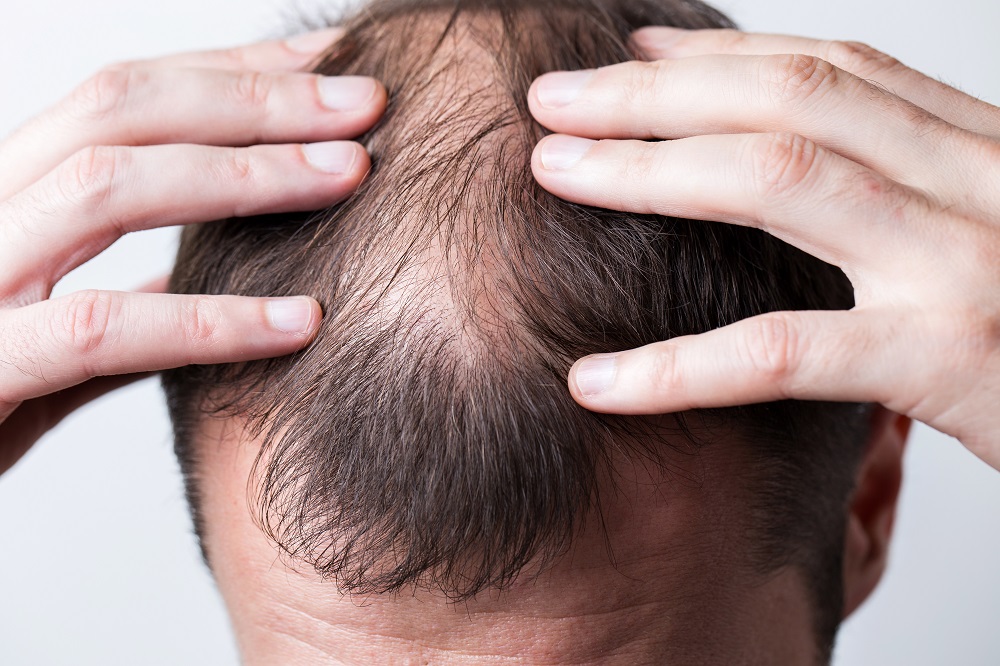
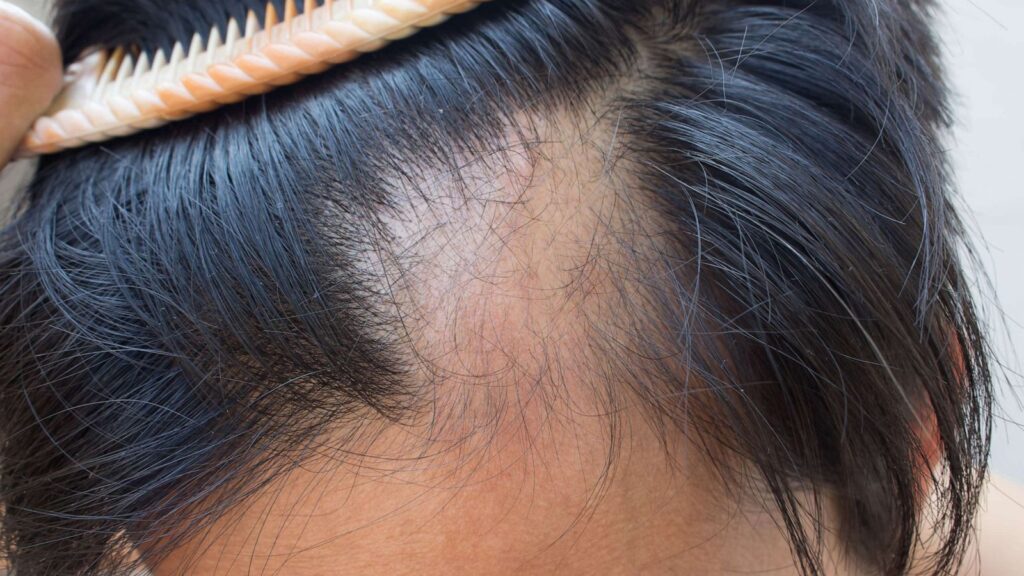
Receding Hairline
The frontal hairline gradually moves backward.
Many men notice:
- M-shaped hairline
- Thinning temples
- Hairline asymmetry
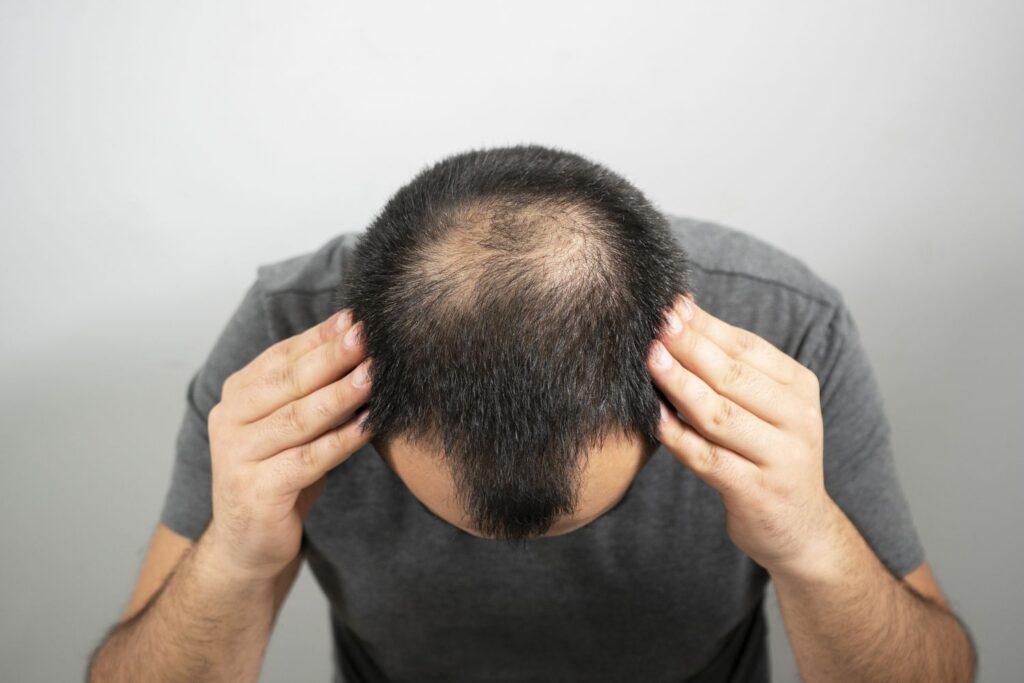
Crown Thinning
Hair density decreases at the top of the scalp.
Patients may notice:
- Visible scalp
- Thinner hair at the crown
- Increased shedding
Reduced Hair Thickness
Hair strands become progressively finer.
This often occurs before significant baldness becomes visible.
Increased Hair Shedding
Some individuals notice more hair fall during:
- Washing
- Brushing
- Styling
Although shedding alone does not confirm male pattern baldness, it may be an early warning sign.
What Age Does Male Pattern Baldness Start?
There is no single age.
Some men develop noticeable hair loss in their:
- Late teens
- 20s
- 30s
- 40s
The earlier hair loss begins, the more important early assessment becomes.
Can Stress Cause Male Pattern Baldness?
Stress does not usually cause androgenetic alopecia directly.
However, stress may worsen existing hair loss and contribute to additional shedding.
Patients with male pattern baldness may notice increased hair fall during periods of:
- Emotional stress
- Poor sleep
- Illness
- Major life events
Managing overall health remains important.
Stages of Male Pattern Baldness
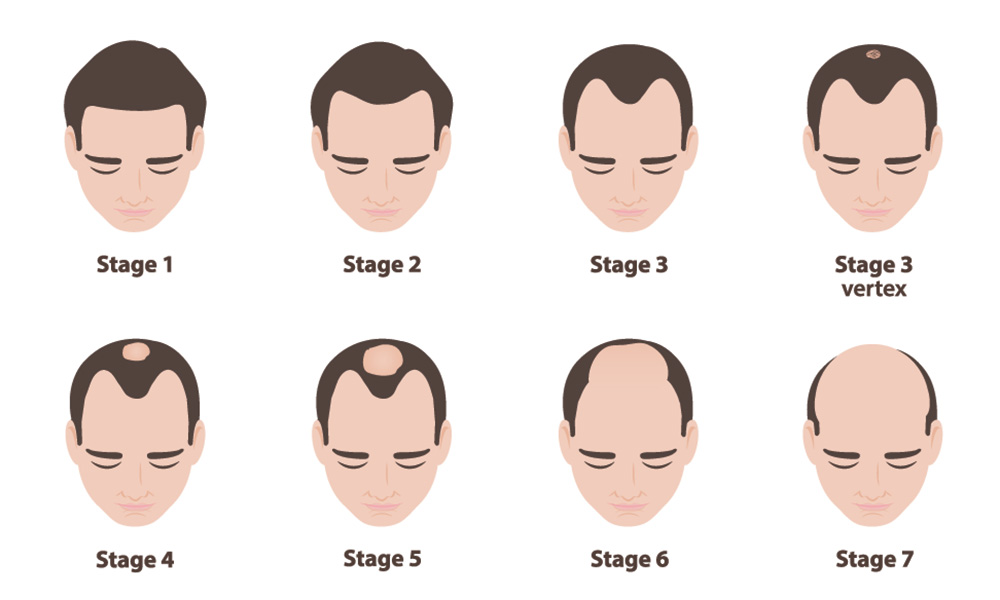
Hair loss often develops gradually.
Common progression patterns include:
Stage 1
Minimal or no visible hair loss.
Stage 2
Early temple recession.
Stage 3
More obvious recession and thinning.
Stage 4
Noticeable crown thinning.
Stage 5 and Beyond
Progressive loss of hair density across larger areas of the scalp.
Not every individual follows the same pattern.
Can Male Pattern Baldness Be Reversed?
The answer depends on the stage of hair loss and the condition of the hair follicles.
Hair follicles that are still active may respond better to treatment compared to follicles that have become inactive for many years.
This is why early intervention is frequently recommended.
Common Treatment Options for Male Pattern Baldness
Treatment plans vary depending on:
- Age
- Severity
- Pattern of hair loss
- Medical history
- Treatment goals
Options may include:
Medical Hair Loss Treatments
Designed to help support hair growth and reduce further hair loss.
Regenerative Hair Treatments
May support scalp and follicle health.
Examples include treatments focused on:
- Hair follicle support
- Scalp rejuvenation
- Hair density improvement
Combination Treatment Programs
Many patients benefit from a personalized approach that combines multiple treatment modalities.
Hair Transplantation
Patients with advanced hair loss may explore hair transplantation as an option.
Suitability varies according to individual circumstances.
Why Early Treatment Matters
One of the biggest misconceptions is waiting until significant baldness develops before seeking treatment.
Earlier intervention may help:
- Preserve existing hair
- Slow progression
- Improve long-term outcomes
- Maintain hair density
Once significant follicle loss occurs, treatment options may become more limited.
How Does Male Pattern Baldness Affect Confidence?
Hair often plays an important role in appearance and self-image.
Many men report concerns such as:
- Looking older
- Reduced confidence
- Self-consciousness in photographs
- Difficulty styling hair
Addressing hair loss early may help improve both appearance and confidence.