
How Collagen Loss Affects Aging: Why Skin Starts to Sag, Thin and Lose Elasticity
What Is Collagen?
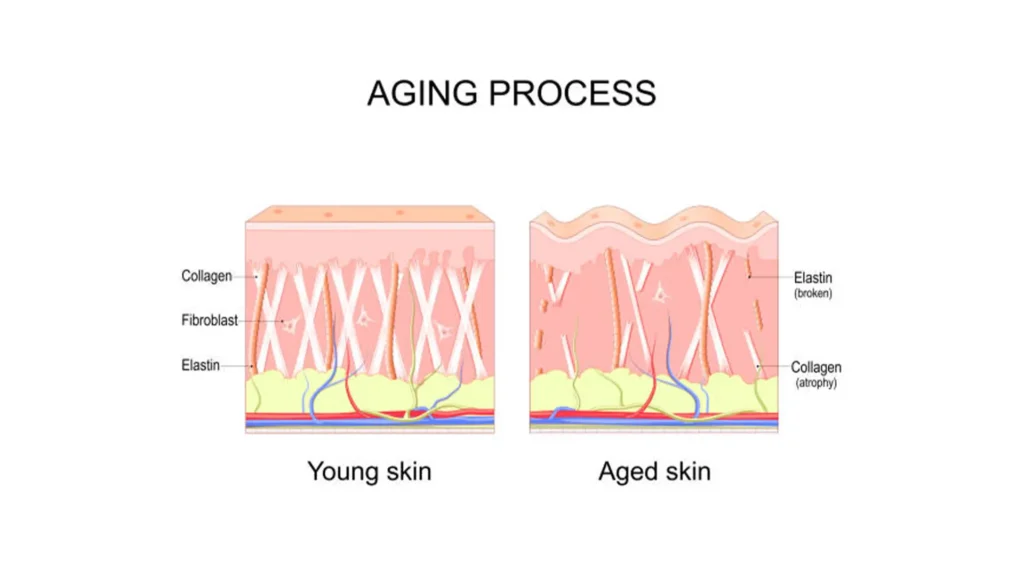
Collagen is the most abundant structural protein in the human body and plays an essential role in maintaining skin strength, elasticity and firmness.
Often referred to as the skin’s natural support framework, collagen helps keep the skin smooth, youthful and resilient.
When we are young, collagen production is naturally high. This is why children and young adults often have:
- Smooth skin
- Firm skin
- Good elasticity
- Minimal wrinkles
- Faster healing
However, collagen production gradually decreases as we age.
Table of Contents
When Does Collagen Loss Begin?
Many people assume collagen loss begins in old age.
In reality, collagen production starts declining as early as the mid-20s.
Research suggests that collagen production decreases gradually each year, leading to cumulative changes over time.
By the 30s and 40s, many people begin to notice visible signs of collagen depletion.
These changes continue throughout life unless proactive steps are taken to support skin health.
Why Does Collagen Loss Happen?
Several factors contribute to collagen decline.
Natural Aging
The body’s ability to produce collagen decreases over time.
This is a normal part of the aging process.
Sun Exposure
Ultraviolet radiation is one of the most significant causes of premature collagen breakdown.
Repeated sun exposure may accelerate:
- Wrinkles
- Pigmentation
- Skin laxity
- Uneven skin texture
Lifestyle Factors
Collagen loss may also be influenced by:
- Smoking
- Poor diet
- Stress
- Sleep deprivation
- Environmental pollution
Hormonal Changes
Hormonal fluctuations, particularly during midlife, may contribute to reduced collagen production and skin aging.
How Does Collagen Loss Affect the Face?
Collagen decline affects multiple layers of the face.
The changes are often gradual, which is why many people only notice them after several years.
Fine Lines and Wrinkles
One of the earliest signs of collagen loss is the appearance of fine lines.
As structural support decreases, repetitive facial movements begin to leave more visible marks on the skin.
Common areas include:
- Forehead
- Around the eyes
- Smile lines
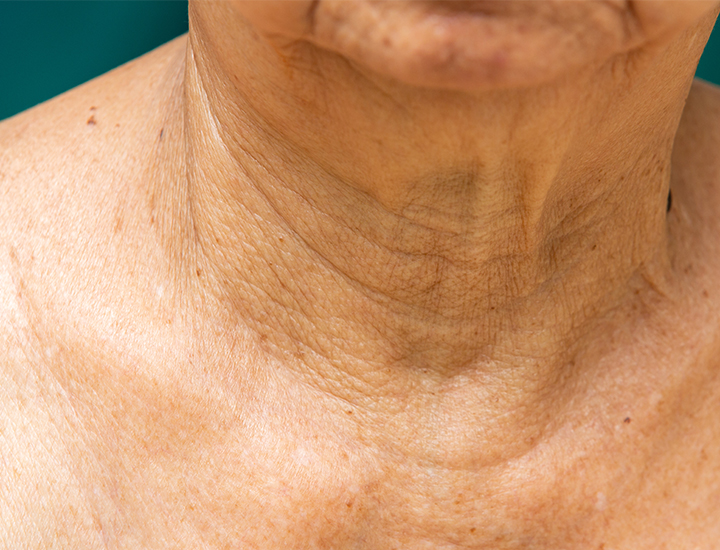
- Neck
Over time, fine lines may develop into deeper wrinkles.
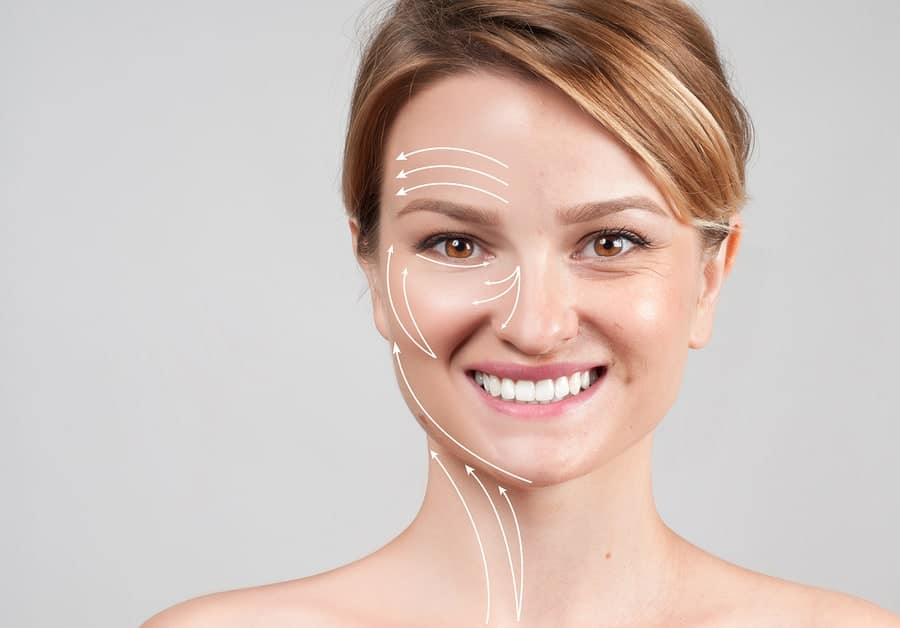
Skin Laxity and Sagging
Collagen contributes significantly to skin firmness.
As collagen decreases, the skin may become less resilient and more prone to sagging.
Common concerns include:
- Mild jowls
- Jawline softening
- Loose skin
- Reduced facial definition
This is one of the main reasons patients seek skin tightening treatments.
Loss of Skin Elasticity
Healthy skin can stretch and return to its original position.
As collagen and elastin decline, the skin becomes less elastic and more fragile.
This may contribute to:
- Crepey skin
- Fine lines
- Poor skin texture
Enlarged Pores and Rough Texture
Collagen helps support the skin’s internal structure.
When collagen levels decline, pores may appear larger and skin texture may become rougher.
Patients frequently describe their skin as:
- Less smooth
- Less radiant
- More tired-looking
Volume Loss and Facial Aging
Although collagen is often associated with the skin, facial aging is more complex.
Collagen loss contributes to changes in:
- Skin support
- Facial contours
- Tissue quality
As support structures weaken, facial volume loss becomes more noticeable.
This may affect:
- Cheeks
- Temples
- Under-eye area
- Jawline
Why Does the Face Start to Look Older?
Most visible aging is not caused by a single factor.
Instead, aging results from a combination of:
- Collagen loss
- Elastin decline
- Volume loss
- Bone remodeling
- Environmental damage
These processes work together to produce visible signs of aging.
Can Collagen Loss Be Prevented?
Aging cannot be stopped completely.
However, certain measures may help slow collagen breakdown and support skin health.
Daily Sunscreen
Protecting the skin from ultraviolet damage remains one of the most effective anti-aging strategies.
Healthy Lifestyle Habits
Factors that support skin health include:
- Balanced nutrition
- Adequate hydration
- Quality sleep
- Stress management
- Smoking avoidance
Early Intervention
Many patients now focus on preventative anti-aging treatments before significant aging changes develop.
Treatments That Support Collagen Production
Modern aesthetic medicine offers several treatment options designed to support collagen production and skin quality.
Polynucleotide Treatments
Examples include:
- Rejuran Healer
- Rejuran HB
- Rejuran I
- Plinest
- Plenyage
- PolyPhil
These treatments focus on:
- Skin regeneration
- Skin repair
- Improved skin quality
- Healthy aging
Skin Boosters
Popular examples include:
- Profhilo
- Jalupro
- Sunekos
- Revok50
- Cellbooster
- Electri
- NCTF 135HA
Skin boosters focus on:
- Hydration
- Skin quality
- Skin radiance
Collagen Stimulators
Collagen stimulators specifically target collagen production.
Examples include:
- Juvelook
- Gouri
- Linerase
- Radiesse
- Collaju
- Novuma
- Deusaderm
These treatments are commonly incorporated into long-term anti-aging strategies.
Skin Tightening Treatments
As collagen decreases, many patients experience mild skin laxity.
Skin tightening treatments such as:
- HIFU
- Radiofrequency technologies
may help stimulate collagen remodeling and improve skin firmness.
Why Prevention Is Better Than Correction
One of the biggest shifts in modern aesthetics is the move from correction to prevention.
Rather than waiting for significant aging changes to develop, many patients now begin collagen-supporting treatments earlier.
Maintaining collagen levels may help preserve:
- Skin quality
- Facial contours
- Skin elasticity
- Overall youthful appearance
Frequently Asked Questions
At what age does collagen loss begin?
Collagen production typically begins declining during the mid-20s.
Can collagen loss be reversed?
While aging cannot be reversed completely, treatments may help support collagen production and improve skin quality.
Why does collagen loss cause wrinkles?
Reduced collagen weakens skin support structures, making wrinkles more visible.
What is the best treatment for collagen loss?
The most suitable treatment depends on individual concerns, skin condition and aging patterns.
Are collagen stimulators better than skin boosters?
They serve different purposes. Skin boosters primarily improve hydration and skin quality, while collagen stimulators focus on collagen production.

Conclusion
Collagen loss is one of the most important factors contributing to visible aging. As collagen production declines, the skin gradually becomes thinner, less elastic and more prone to wrinkles and sagging.
Understanding how collagen loss affects the face allows patients to make informed decisions about prevention and treatment. With the right combination of lifestyle habits and regenerative treatments, it is possible to support collagen production and maintain healthier, more youthful-looking skin over time.
Book Appointment Today
📞 Call us today at Hotline Malaysia: +60 11 3341 0688
Clinic Location:
NextMed Clinic Petaling Jaya
38, Jalan Gasing, Bukit Gasing, 46000 Petaling Jaya, Selangor
NextMed Clinic Cheras
8-G, Jalan Simfoni 1, Menara Simfoni, Cheras Selatan, Balakong, 43300 Seri Kembangan, Selangor
NextMed Clinic Setia Alam
71-G & 73-G Jalan Eco Ardence D U12/36D, 40170 Shah Alam, Selangor
NextMed Clinic Damansara Heights Kuala Lumpur
No. 11G, Plaza Damansara, Jalan Medan Setia 1, 50490 Damansara Heights, Kuala Lumpur
Read More:
Real Customer Review
Rated 5/5 Stars
Read why customers chose NextMed Clinic.
Why Choose NextMed Clinic?
At NextMed Clinic, our approach to healthy aging focuses on prevention, regeneration and natural-looking rejuvenation.
By combining skin boosters, collagen stimulators, skin tightening technologies and personalized treatment plans, we aim to support healthy skin aging while maintaining natural facial harmony.
Certified Doctor
.